
The cosy old pub as Intangible Cultural Heritage: Why This Part of Dutch Culture Deserves Protection
The traditional Dutch "brown café" is getting a place on the Dutch list of intangible cultural heritage. That is about much more than symbolic recognition. It is an acknowledgment of a café tradition that is deeply woven into everyday life in Dutch cities and towns. At a time when more and more of these characterful pubs are disappearing, awareness is growing that the brown café is not just a hospitality business, but also a social and cultural anchor.
But what exactly makes a café a true brown café?
What Is a cosy old pub?
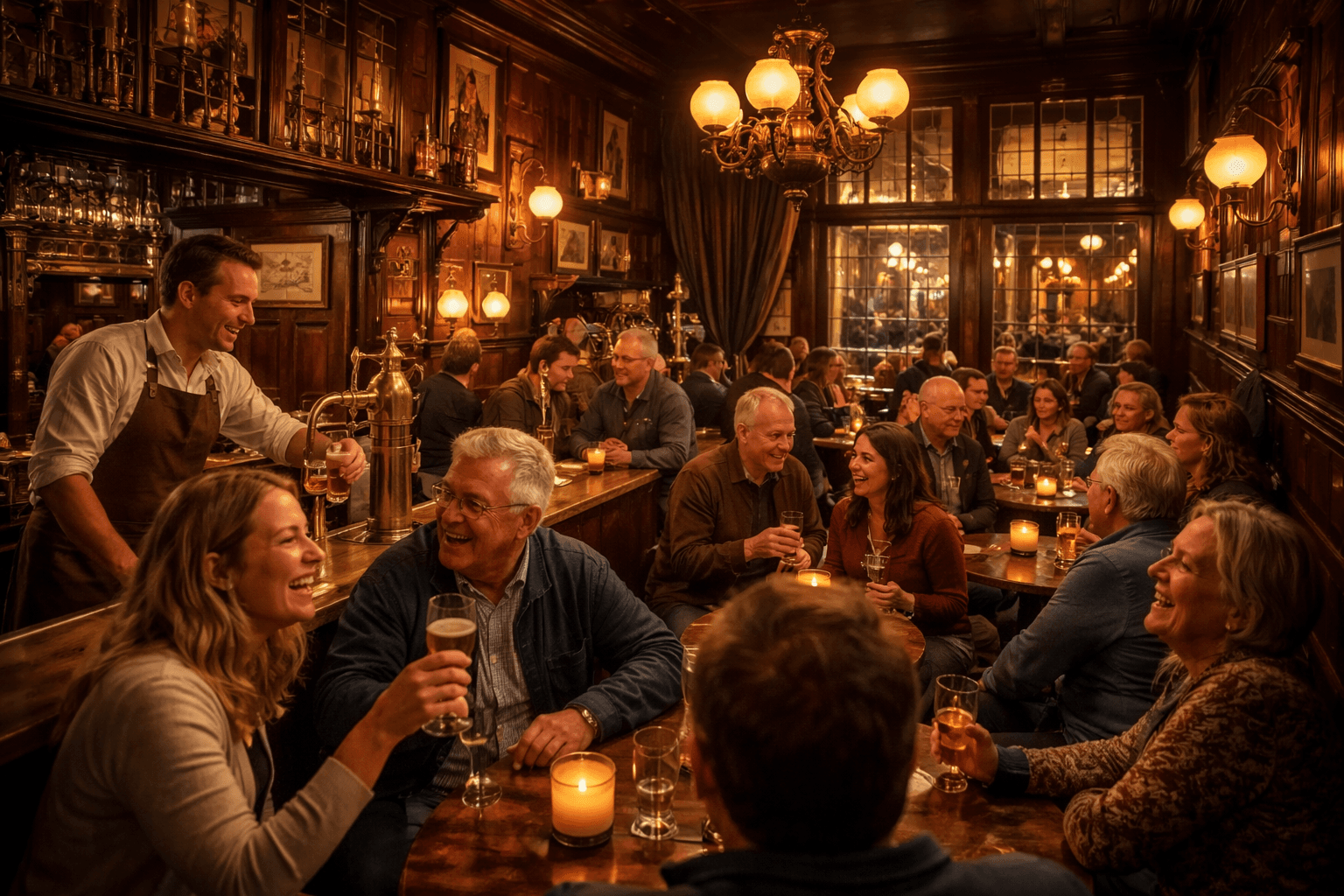
A cosy old pub is not easy to define in one strict sentence. Of course, the interior and atmosphere matter: wooden wall panels, old windows, a time-worn bar, classic details and a warm, informal setting all play their part. Still, the essence goes beyond appearance alone.
The true value of a cosy old pub lies in what happens the moment you walk in. It is a place where people meet without making plans first, where regulars feel at home and new visitors naturally blend in. You do not go there for trends or unnecessary extras, but for connection, familiarity and simplicity.
More Than a Pub: A Social Meeting Place
Traditionally, the cosy old pub is a place where all kinds of people come together. Local residents, entrepreneurs, older guests, younger visitors, marketgoers and passersby all share the same room. That mix is exactly what makes these cafés so special.
At a time when so much contact happens online, the cosy old pub offers something that is becoming increasingly rare: spontaneous human interaction. The conversation at the bar, the familiar round of drinks, the staff recognizing your face and the feeling that you can simply be yourself without having to prove anything. That is what makes the brown café an accessible living room for the neighborhood.
Why the cosy old pub Is Becoming Intangible Cultural Heritage
Intangible cultural heritage is not only about buildings or physical objects. It is about traditions, customs and forms of community life that are passed down from one generation to the next. That is exactly why the brown café belongs in this category.
It represents a living culture: the way people meet there, the way hospitality takes shape, the way habits continue over time and the way a café can become part of the identity of a street, neighborhood or city. The cosy old pub reflects a part of Dutch society that will not preserve itself automatically.
By adding this café culture to the heritage list, more attention is being given to its cultural value. That creates awareness and helps strengthen local efforts aimed at preservation.
Cosy old pub Are Under Pressure
This recognition comes at an important moment. Many traditional pubs are struggling. Rising costs, changing nightlife habits, staff shortages and pressure on inner cities are causing more and more brown cafés to disappear.
And when one of these places closes, more disappears than just a hospitality venue. A piece of local memory disappears with it. These cafés hold the stories of a neighborhood: fixed rituals, generations of regulars and the rhythm of daily life in a city on a smaller scale.
That is why municipalities are increasingly exploring ways to map, value and protect these cafés. The heritage status fits within that broader movement.
The Atmosphere of a cosy old pub: Warm, Familiar and Unpretentious
Anyone who has ever visited a real Dutch cosy old pub recognizes it immediately. Not because every café looks the same, but because they share a similar atmosphere. They are welcoming, familiar and unpretentious. There is no pressure to perform. The focus is on togetherness, good conversation and a sense of continuity.
So the “brown” in brown café does not only refer to the color of the interior. It also reflects the depth and layered character of the place itself. These are cafés with history, long-standing habits and a personality that cannot simply be copied by a new concept or modern design.
Why This Heritage Matters
Recognizing the cosy old pub as intangible cultural heritage highlights how important these places are to the social fabric of the Netherlands. They connect people, keep neighborhoods alive and create space for human contact without barriers.
In a society where many public spaces and local facilities are disappearing or changing, these cafés remain the kind of places that offer familiarity and genuine closeness. Protecting the brown café therefore also means protecting connection, accessibility and local identity.
The Future of the cosy old pub
Recognition as intangible cultural heritage is an important step, but it is not the end of the story. The real question is how these cafés can continue to exist in the years ahead. That requires attention from municipalities, entrepreneurs, visitors and everyone who values local cultural heritage.
The cosy old pub will only survive if people continue to care about it and continue to visit it. A cosy old pub is not a museum piece. It is a living place, carried by people, conversations and everyday routines.
In Closing
The recognition of the cosy old pub as intangible cultural heritage is more than justified. Not only because of the nostalgic image attached to it, but especially because of the role these cafés still play in the everyday lives of local residents, regular guests and passing visitors. They are places where people meet, where stories linger and where hospitality still feels personal.
The cosy old pub is therefore not only part of the past, but also part of the present and the future. That is exactly why it is important that these special cafés are not only culturally appreciated, but also practically supported so they can continue to operate.
And for many small pubs, that is where the real challenge begins: finding enough good people without immediately needing complex staff schedules.
Even a Small cosy old pub Can Plan Smart
For a small pub with a fixed team of only two or three people, a full-scale employee scheduling system may seem unnecessary. In many cases, you can manage with short lines of communication, flexibility and personal contact. Still, a staff scheduling app for small hospitality businesses, such as Tiemdo, can be surprisingly useful for a small cosy old pub.
Why? Because smart planning does not always mean working with large schedules and complicated systems. Sometimes it starts with one simple question: who is available when needed?
More Help in Your Pub, Without the Hassle
Many traditional pub run on a small, close-knit team. But there is often also a wider circle of people who are willing to help out now and then. Think of former employees, friends, familiar faces from the neighborhood or people who simply love the pub and would enjoy picking up a shift once in a while.
With the Tiemdo app, that becomes easy to organize.
Instead of putting everything into a fixed roster, you can work with availability. Employees or helpers can indicate in the app when they are free. That creates room to build a flexible support network around your pub: people who may not work every week, but are happy to step in when it suits them.
For a small cosy old pub, that is ideal. You keep staff planning simple and clear, while at the same time expanding your possibilities.
A Smaller Core Team, A Larger Flexible Support Group
In a pub where atmosphere and familiarity matter, it is important to protect your core team. But when the same people have to cover every shift, overload can happen quickly. You notice it in their energy, in the level of service and ultimately in the atmosphere on the floor.
By using Tiemdo to build a broader group of available helpers, you can reduce the pressure on your regular pub staff. That means less stress, fewer excessive hours and more room to enjoy the work. And in a cosy old pub, where hospitality and personal attention are everything, that makes a real difference.
A relaxed team creates a better guest experience at the bar.
Working With Open Shifts in Hospitality
Another useful feature is the option to work with open shifts. Need extra hands on a busy Saturday, during a market, a local event or an unexpectedly full evening? You can simply make that shift available in Tiemdo.
People from your flexible group can then sign up for that shift themselves if they are available.
That also makes Tiemdo a strong hospitality scheduling app for small cafés. There is no need to send endless messages or contact everyone individually. Instead, you post the shift, and the people who want to help can respond themselves.
That makes scheduling faster, clearer and much more accessible — exactly the way a small cosy old pub likes to work.
Why Tiemdo Also Works for a cosy old pub
What makes a cosy old pub special is its human character. It is not about extras or unnecessary complexity, but about simplicity, warmth and connection. That is exactly why a practical solution like Tiemdo fits so well.
Not because everything needs to become bigger or more complicated, but because a smart system helps you preserve the personal character of your pub. You stay in control of availability, make it easier for people to help out now and then and prevent the same few team members from carrying all the pressure.
That leaves more time and energy for what really matters: a lively bar, good conversations, familiar faces and a welcoming atmosphere.
Tiemdo for Small Hospitality Businesses
Do you own a small pub, neighborhood pub or traditional pub? Then staff planning does not have to be difficult or time-consuming. Even with a small team, a smart approach can make a big difference.
With Tiemdo, you can:
work with availability instead of fixed schedules
easily build a flexible pool of helpers or staff
share open shifts that people can sign up for themselves
reduce the pressure on your core team
create more calm, clarity and a better working atmosphere
For a small brown café, that can be exactly the difference between barely managing your staffing and running your café with more ease and enjoyment.
Want to Preserve the cosy old pub? Start With a Strong Team
The future of the cosy old pub is not only about heritage recognition and appreciation. It is also about entrepreneurship and making smart practical choices. No matter how special your café is, without people who enjoy helping out, it becomes difficult to maintain that warm pub atmosphere.
With Tiemdo, it becomes easier to find, organize and keep those people involved — in a way that suits a small pub.
That means you are not only improving your scheduling, but also strengthening your pub, your team and the atmosphere that makes a traditional pub so special.
With Tiemdo, you can start planning from just €1 per employee. There are no setup costs and no hidden fees. Just clear and transparent pricing. For more information, visit www.tiemdo.com.